

April / May 2024.
resident artist of the project POP Adriatico / Porto Osservatorio Partecipato
by ABC – Adriatico Book Club
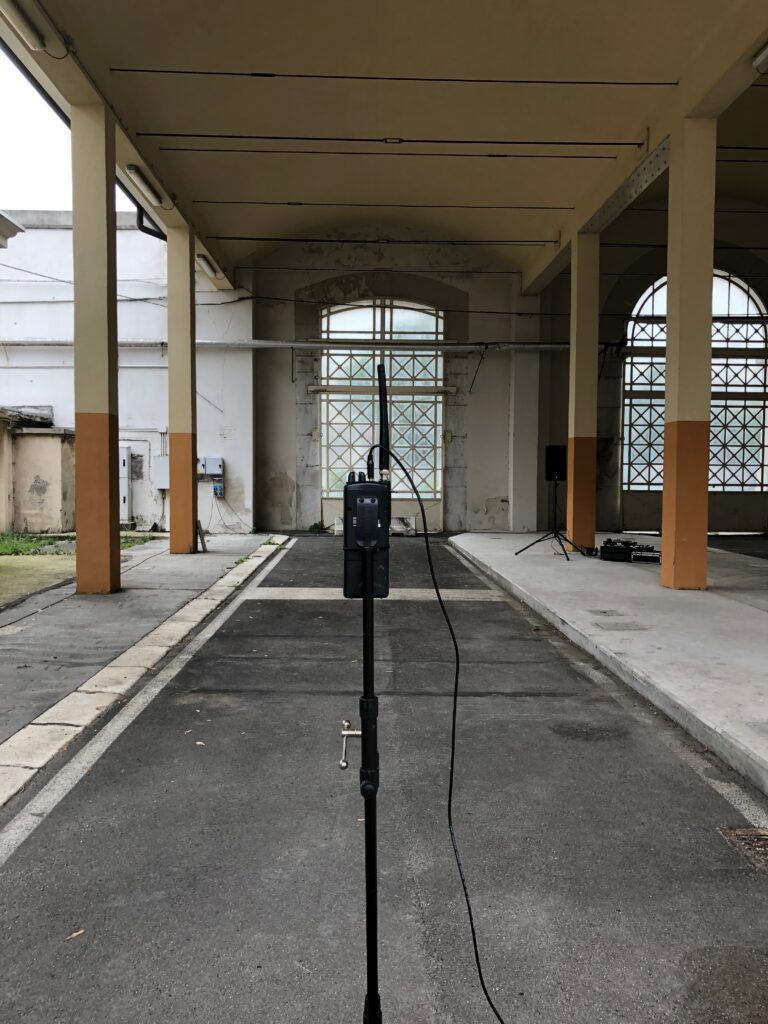
Madeleine Ruggi’s device to access the voices of the communicational web of the port of trieste, a 30 channel radio scanner,
[top]
in a research mapping during her 1 month residency at the Clanz, and
[bottom]
in the 4 channel audio installation at the monumental gates of the old port, which is based on historical and contemporary recordings of chants of regional female port workers. Today, the only female sounds left are the synthetic voices of navigation systems.
„La lingua me defendi“ was the outcome of my research during a residency in Trieste, Italy, with POP Adriatico. The four-channel sound installation focused on women’s work at the port, in the present day and the past. The work was installed in Varco Monumentale VII, a part of the original port, in an area surrounded by disused warehouse buildings.
The installation was a sonic collage which gathered musical recordings of the sesolòte women from the past with contemporary women’s song, live maritime radio reports and more, to form a constellation of sound-based research in a part of the port near where the sesolòte once worked. The work overlapped multiple voices: through sound, the women of the past and present crossed and communicated. These sounds were dispersed from the port — just as goods are dispersed to sea.
In the late 19th and early 20th centuries, the port of Trieste relied upon the sesolòte women: hard-working, underpaid women who spent long arduous days sorting and packaging shipped commodities — from coffee to cotton, flour to tobacco. The sesolòte were strong, independent women central to the functioning of the port, yet their contribution went barely acknowledged. La lingua me defendi were among the lyrics (in local dialect) that these courageous women sang together, while busy working, roughly translating as ‘my tongue/my words/my language defend me’. Their indispensable labour was considered secondary to the mens’, despite crucially enabling the flow of commodities in and out of the port and stabilising the economic fortunes of the Austro-Hungarian empire.